 Insider · Europa Wire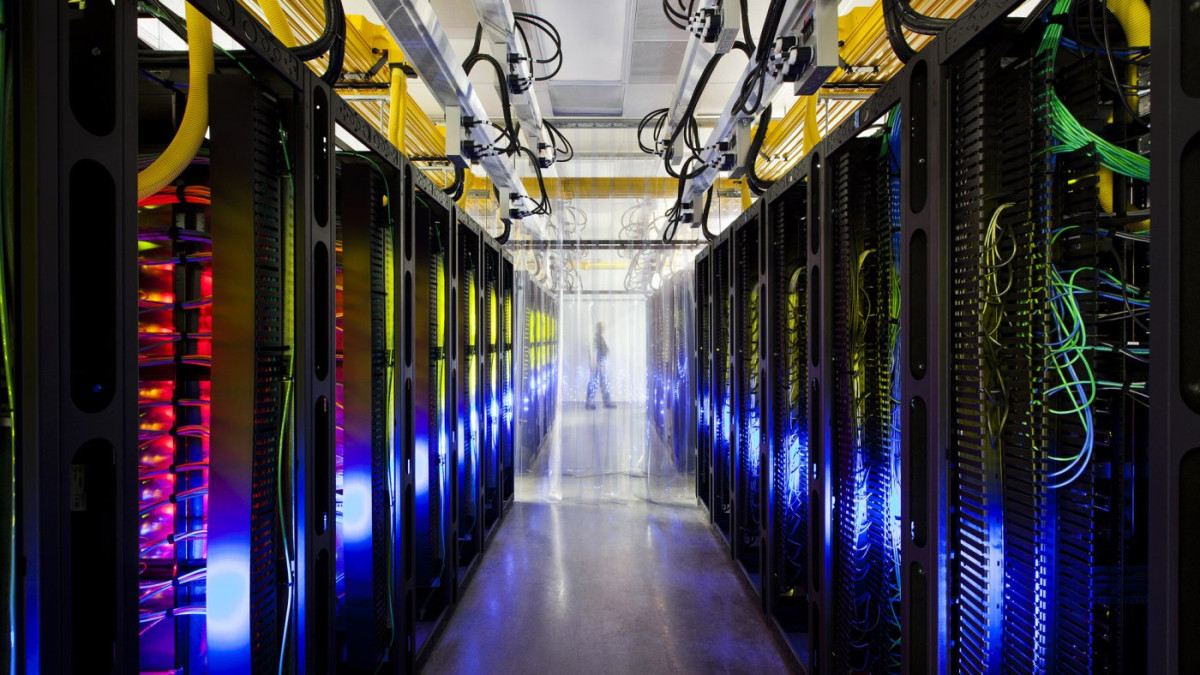
Home Energy Energy-General By Alex Kimani - Oct 14, 2026, 7:00 PM CDT Kentucky secures a $100 billion AI energy investment, featuring a 1.8-GW data center campus, 2 GW of gas-fired power, and 2.6 GW of battery storage. AI infrastructure investment faces growing financial pressure, with Stargate projects struggling with debt financing, permitting delays, and soaring electricity costs. Public opposition to data centers is mounting, with over $130 billion in U.S. projects reportedly delayed or blocked amid environmental and economic concerns.
The U.S. Department of Energy (DoE) has announced a landmark $100-billion private investment to turn the former uranium enrichment site in Western Kentucky into the new Paducah American Energy Hub, marking one of the largest economic development projects in Kentucky's history. Led by U.S.
Secretary of Energy Chris Wright, the initiative will bring together a private-sector coalition to build a massive artificial intelligence and high-performance computing (HPC) innovation campus powered by new energy infrastructure. The phased buildout is targeted for 2032, and is expected to create roughly 8,000 construction jobs and 600 permanent operations jobs. Brookfield Asset Management (NYSE:BAM) has been selected to build the 1.8-gigawatt (GW) AI and HPC data center campus while NextEra Energy (NYSE:NEE) will develop 2 GW of natural gas-fired generation coupled with 2.6 GW of battery energy storage.
The project is designed to operate on dedicated power supplies capable of feeding excess energy back to the regional grid to avoid raising utility bills for local families and businesses. The campus will also deploy a modern closed-loop cooling system to continuously recirculate water and minimize external consumption. The project leaders emphasize that this design is vastly more resource-efficient compared to the site's previous tenant, the Cold War-era Paducah Gaseous Diffusion Plant, which was originally designed to pull up to 30 million gallons of water per day from the Ohio River.
Still, the Paducah project comes at a time when the market is souring on heavy AI infrastructure spending. Last year, Trump, alongside Oracle’s Larry Ellison, OpenAI CEO Sam Altman and SoftBank CEO Masayoshi Son, unveiled Stargate , a private-sector joint venture intended to invest up to $500 billion over four years to build hyper-scale AI data centers and energy infrastructure across the United States. Billed by Trump as the "largest AI infrastructure project in history," Stargate is designed to secure American dominance in AI over foreign competitors like China.
Oracle serves as the core cloud and infrastructure provider for the venture. Initial development of the project began in Abilene, Texas, consisting of multiple 500,000-square-foot data center buildings to house the immense computing power needed for next-generation AI models. Unfortunately, the ambitious AI infrastructure project found itself on the ropes just months after its grand launch.
Back in January, Business Insider reported that JPMorgan Chase was having trouble syndicating the $38 billion in construction debt it underwrote for the Stargate AI data center initiative as institutional investors grow increasingly cautious regarding concentrated tech sector exposure. Banks spent more than six months attempting to distribute the multi-billion-dollar debt packages for the Stargate campuses located in Texas and Wisconsin; however, buyers appeared uninterested in taking on massive piles of debt tied heavily to single-tenant AI operations. Oracle leases the facilities, and S&P cut Oracle in July to BBB-, one notch above junk , over its data center spending.
Investors demanded a higher return to hold the debt, and the banks had to sell it at a discount. In April, OpenAI officially paused its Stargate UK data center project, citing high industrial electricity prices and regulatory uncertainty. Stargate UK was planned in partnership with hardware firms Nvidia (NASDAQ:NVDA) and Nscale, aiming to deploy thousands of advanced AI chips (starting with 8,000 GPUs and scaling up to 31,000) across sites in North-East England, including Cobalt Park near Newcastle and Blyth.
Whereas OpenAI did not cancel the project outright, the AI giant says it will only resume development only when the "right conditions" allow for long-term infrastructure investment. The pause dealt a major blow to UK infrastructure partner Nscale (founded by Josh Payne), which had been scaling up operations and weighing a potential stock market IPO, as well as Britain’s push to emerge as a sovereign AI superpower. The UK pause is the second blow to OpenAI's planned capacity in a month.
Last month, Bloomberg reported that Oracle’s pivotal $18-billion Project Jupiter, a massive 1,400-acre data center campus in New Mexico critical to supporting the broader AI infrastructure goals, has stalled. Oracle issued a force majeure notice to lender Blue Owl Capital regarding the 2.45-gigawatt hyperscale data center in southern New Mexico after the tech giant failed to secure vital state and federal land-use permits for a planned natural gas plant. Instead, Oracle announced plans to shift over to solid oxide fuel cells (SOFCs), an experimental stopgap that has never been deployed on a scale this large.
Public resistance to data centers has been growing rapidly across the United States, Europe and Asia as communities push back against the massive environmental and economic footprint of AI infrastructure. A recent Gallup poll shows that roughly 71% of Americans oppose the construction of AI data centers in their localities. Pushback in the U.S. has resulted in projects worth over $130 billion blocked or delayed, with reports indicating more than 500 active data center bans or moratoriums have popped up nationwide.
By Alex Kimani for Oilprice.com More Top Reads From Oilprice.com Russian Strikes Cut Power to 600,000 Ukrainians Days After U.S. Diesel Deal India’s Gas Demand Drops as Iran War Hikes LNG Spot Prices China's Coal Imports Fall 6% as Prices Hit Nearly 3-Year High Download The Free Oilprice App Today Back to homepage Alex Kimani Alex Kimani is a veteran finance writer, investor, engineer and researcher for Safehaven.com. More Info Leave a comment EXXON Mobil -0.35 Open 57.81 Trading Vol. 6.96M Previous Vol. 241.7B BUY 57.15 Sell 57.00