 Insider · Europa Wire
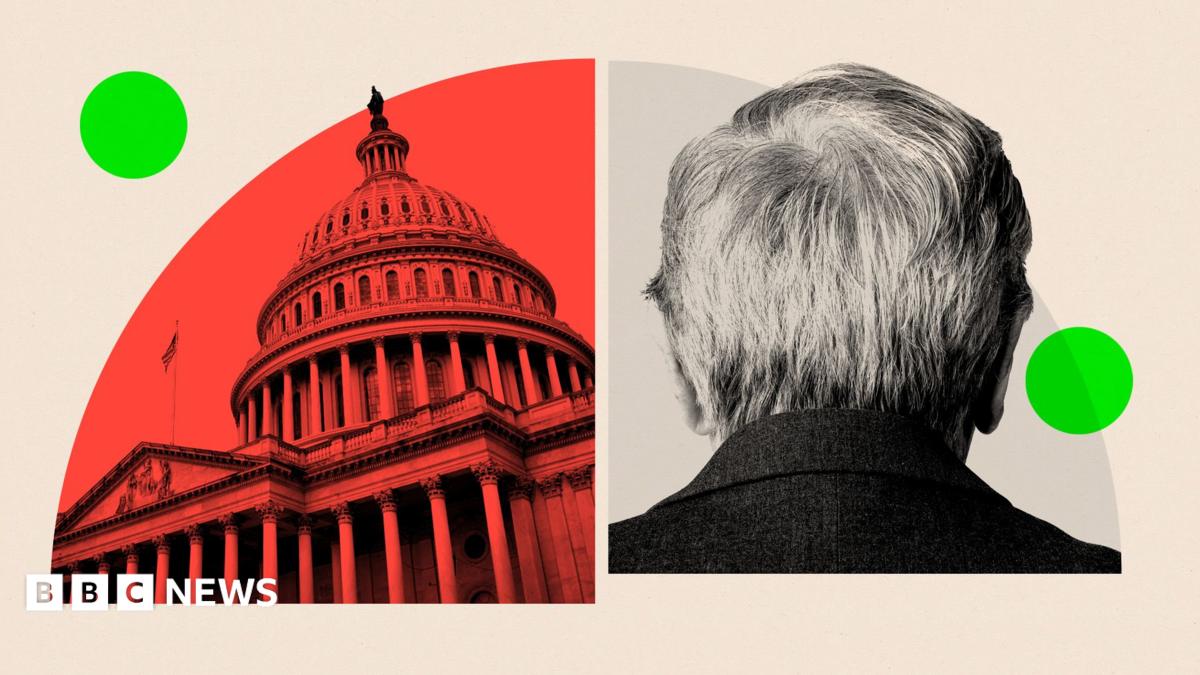
Twenty-seven-year-old Republican Riley Owen is one of the few candidates from Gen Z - aged in their early teens to late 20s - from either party running for Congress on 3 November. Owen is running in a newly created district in Utah that experts say may lean towards the Democrats. He has championed issues including paid maternity leave, restrictions on congressional stock trading and environmental action - all issues that may appeal to Democratic supporters.
When he was confirmed as his party's candidate in the state's 1st congressional district, he walked on stage to Billy Joel's We Didn't Start the Fire, and argued that his generation needed to help renew the American Dream. The gerontocracy is "a bipartisan issue", he says. "We've got people who have become career politicians, and they spend their lives in Congress." He says this is indicative of a system that is not delivering for Americans.
Owen says the big challenge he faces is the fact that money really talks in US politics. Research suggests campaign donors tend to prefer incumbent candidates. Indeed, the campaign of his rival Ben McAdams - a 51-year-old Democrat who has previously served in Congress - has so far raised much more cash than Owen's.
By mid-October, McAdams had raised over $2.6m (£1.9m), compared with $150,000 raised by Owen, according to records on the Federal Election Commission website. Owen argues that his generation is uniquely well-placed to understand contemporary political issues, such as the challenges posed by tech. He also disputes any suggestion that a younger candidate necessarily lacks relevant experience - pointing to his own background as a military officer and a White House policy analyst.
"I think in politics, just like in industry, we need what's called disruptive innovation," he says. The age of America's top politicians has long been a talking point. In 1984 Reagan - who was then America's oldest president at age 73 - deflected scrutiny with a quip about the "youth and inexperience" of his opponent Walter Mondale, who was a sprightly 56.
In the US, individual states also have their own legislatures, with a Senate and a House, where many politicians make their start. Many current members of Congress spent years in state politics before running for a seat in Washington For those young people who do end up in high-profile political positions, the next question is whether they can make a success of it, especially when it comes to parenthood. Over the summer, the stories of two high-profile young women working in Washington raised fresh questions around compatibility of the job with motherhood.
Alexandria Ocasio-Cortez, 37, a Democratic congresswoman who took office aged 29, announced that she had started the process of freezing her eggs. Later the same week in August, Karoline Leavitt, 29, who was appointed the youngest ever White House press secretary almost two years earlier, said she would leave the Trump administration to spend more time with her family, including her newborn baby. She explained: "I cannot be the best mom my two young children deserve while devoting the constant time, energy and attention required of [being] the White House press secretary." Only a handful of women have given birth while elected to Congress, while a few dozen lawmakers are mothers to children under the age of 18.
The federal government, like many US employers, does not offer paid parental leave. JD Vance, 42, one of the youngest vice-presidents in US history, recently acknowledged that having young children might impact on his own decision to run for the White House in 2028, saying: "We've got four little kids."
Source: BBC